
Mastering the Third Shot Drop: The Most Important Shot in Pickleball
Step-by-step mechanics, advanced drills, and common mistakes. This guide will take your transition game from "Praying" to "Playing".
Coach Mike Chen
Published 2026-01-03
📖 In This Article
Step-by-step mechanics, advanced drills, and common mistakes. This guide will take your transition game from "Praying" to "Playing".
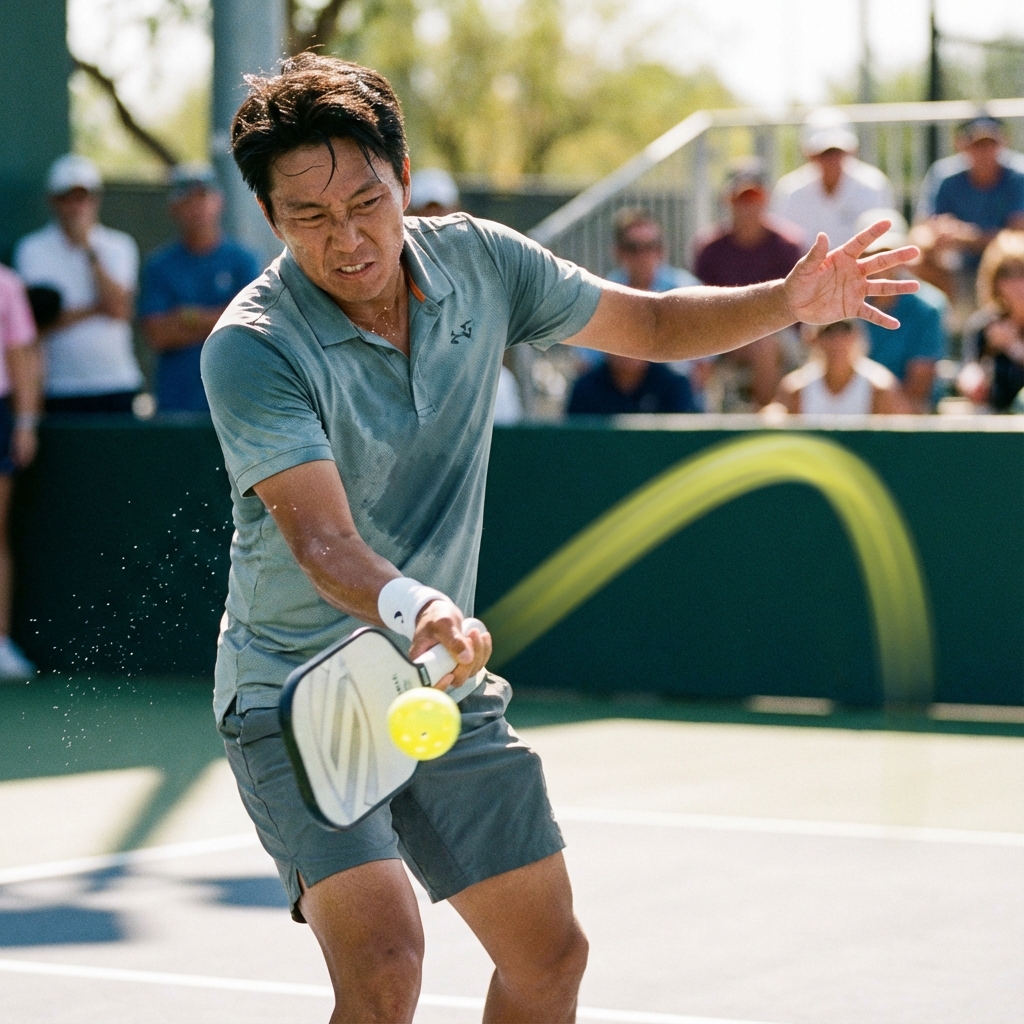
The "Barrier to Entry" Shot
Ask any 5.0 player what separates them from a 3.5 player, and they will say one thing:
"I can reset the ball."The Third Shot Drop is the ultimate reset button. It is the hardest shot to learn, but the most rewarding. Without it, you are stuck playing "Bang-Ball" at the baseline forever.
Part 1: The Theory (Why Are We Doing This?)
The Problem
- 1Serve (Shot 1): You hit it deep. You stay back.
- 2Return (Shot 2): They hit it deep. They run to the net.
- Result: They are at the net (Strong Position). You are at the baseline (Weak Position).
The Solution
If you blast the ball at them (Shot 3), they will block it back instantly because they have the high ground. You need a shot that:
- Travels slowly (gives you time to run).
- Lands in the kitchen (forces them to let it bounce).
- Cannot be attacked (low apex).
That is the Third Shot Drop.
Part 2: The Mechanics (Step-by-Step)
1. The Stance
- Open up: Face the net.
- Low Center of Gravity: Drop your butt. Do not bend at the waist.
- Paddle Position: Out in front, below the ball.
2. The Grip
- Pressure: 3 out of 10. Imagine you are holding a tube of toothpaste and you don't want to squeeze any out.
- Why? Tight grip = Fast bounce. Loose grip = Dead bounce.
3. The Swing
- It's a "Push": It is not a tennis topspin stroke. It is a shovel motion.
- Vector: Low-to-High. Lift the ball.
- Follow Through: Finish toward your target.
4. The Apex (The Secret)
- The mistake beginners make is aiming for the kitchen line.
- The Fix: Aim for an imaginary hoop 1-2 feet above the net. The ball should cross the net on its way down.
Part 3: Drive vs. Drop (The Strategy)
You don't always have to drop.
When to DRIVE (The "Shake and Bake")
- Return is short (mid-court).
- Return is high.
- Opponent is slow getting to the net.
- Goal: Hit it hard to create a weak popup on the 5th shot.
When to DROP
- Return is deep.
- Return has heavy backspin.
- Opponents are established at the net.
- Goal: Neutralize the point and get to the kitchen.
Part 4: Troubleshooting Common Errors
"My drop is too high" (The Meatball)
- Cause: Decelerating on contact. You are scared it will go long, so you stop your swing.
- Fix: Accelerate smoothly through the ball. Trust the arc.
"My drop goes into the net"
- Cause: Lifting the head, not the ball.
- Fix: Bend your knees more. Lift with your legs, not your arm.
Part 5: The "Pro" Drill
"The 2-Touch Game"- Setup: Partner at Kitchen, You at Baseline.
- Action: You hit a drop.
- Constraint: You must move forward 2 steps after every shot. If you can't get to the kitchen in 3 shots, you lose.
- Goal: Learn to trust your drop enough to run behind it.
Conclusion
The Third Shot Drop is 30% technique and 70% confidence. You have to believe you can float a delicate wiffle ball into a tiny bucket from 22 feet away. Go practice.
🏓 Ready to Start Playing?
Find courts, connect with players, and track your progress with DinkAI – the #1 pickleball app.
Related Topics
Coach Mike Chen
The DinkAI team is dedicated to helping pickleball players of all levels improve their game, find courts, and connect with the community.
Related Articles
Stacking in Doubles Pickleball: The Strategy That Wins Games
Learn why pro teams stack, when to use this advanced formation, and how to execute it without confusing your partner.
Read →
Master the Kitchen Line: Your Complete Defense Guide
Learn how to dominate at the non-volley zone with proper positioning, soft hands, and defensive strategies that will frustrate your opponents.
Read →
The Flashy Stuff: How and When to Hit an Erne or ATP
They are the highlight-reel shots of pickleball. Learn the mechanics, the rules, and—most importantly—when to actually attempt an Erne or ATP.
Read →