
The 25 Best Pickleball Drills for Beginners: The Ultimate Guide to Rapidly Improving Your Game
The most comprehensive pickleball drill guide on the internet. 25 proven drills for solo, partner, and group practice. Includes video descriptions, skill progressions, common mistakes, and 4-week practice plans used by coaches.
Coach Mike Chen
Published 2026-01-02
📖 In This Article
The most comprehensive pickleball drill guide on the internet. 25 proven drills for solo, partner, and group practice. Includes video descriptions, skill progressions, common mistakes, and 4-week practice plans used by coaches.
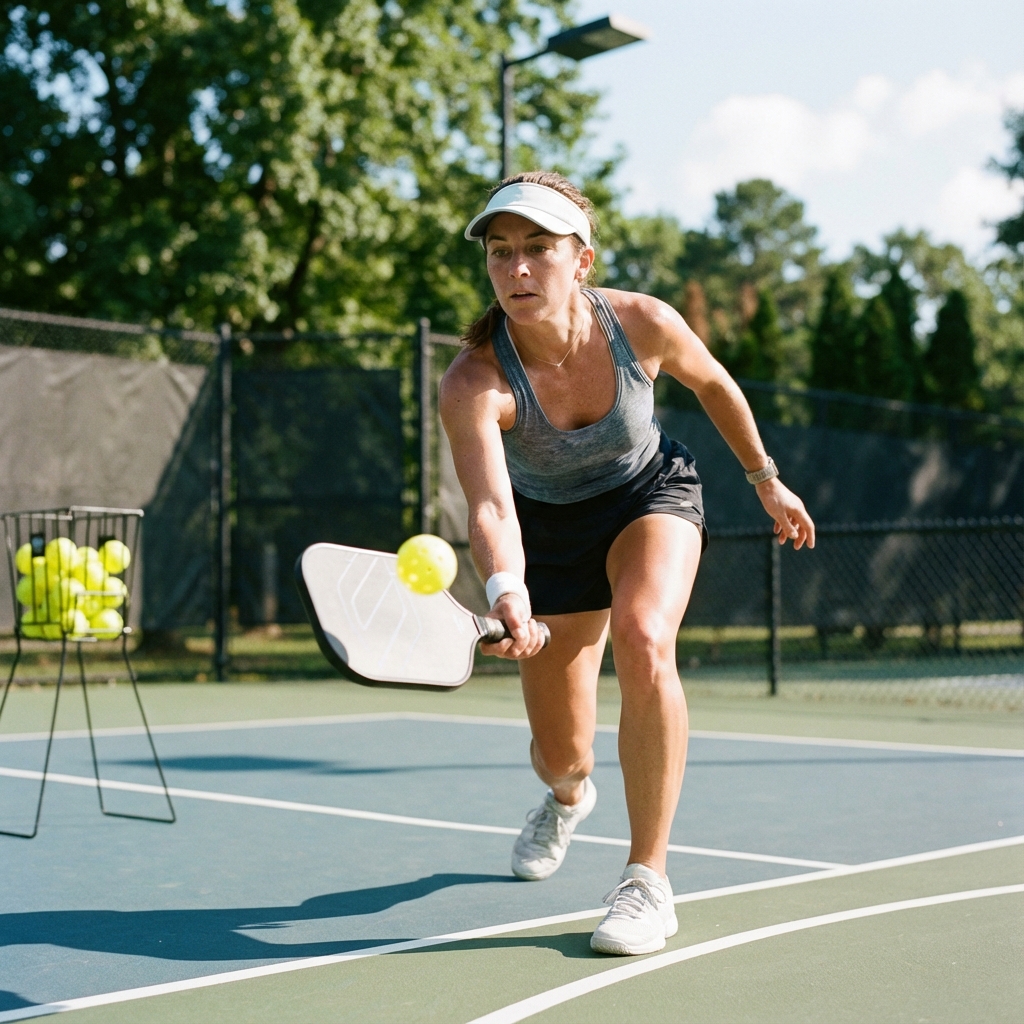
If you've been playing pickleball for a few months and feel like you've hit a plateau, you're not alone. I've coached hundreds of players who come to me frustrated, saying "I play 3 times a week but I'm not getting better."
Here's the truth that changed my game: Playing games is NOT the same as practicing. Games are for testing your skills. Drills are for building them.In this comprehensive guide, I'm sharing the 25 best pickleball drills that I use with my students—from complete beginners to 4.0+ players looking to refine their fundamentals. Whether you're practicing solo against a wall, with a partner, or in a group, you'll find drills that will transform your game.
What you'll learn in this guide:
- 8 solo drills you can do anywhere (no partner needed)
- 10 partner drills for all skill levels
- 7 group/competitive drills for game-like practice
- Common mistakes to avoid for each drill
- 4-week structured practice plans
- How to track your progress
Let's dive in.
Table of Contents
- 1[Why Drills Matter More Than Games](#why-drills-matter)
- 2[How to Structure Your Practice Sessions](#structure-practice)
- 3[Solo Drills (No Partner Needed)](#solo-drills)
- 4[Partner Drills (Cooperative)](#partner-drills)
- 5[Group and Competitive Drills](#group-drills)
- 6[Skill-Specific Drill Progressions](#skill-progressions)
- 7[4-Week Practice Plans](#practice-plans)
- 8[Common Mistakes and How to Fix Them](#common-mistakes)
- 9[Equipment for Better Practice](#equipment)
- 10[Frequently Asked Questions](#faq)
Why Drills Matter More Than Games
I see it every single day at my local courts. Four players arrive, hit a few dinks for 2 minutes, then play games for 2 hours straight. Six months later? They're playing at the exact same level.
Here's why games don't make you better:- 1You only hit certain shots situationally. In a 2-hour session, you might hit only 5-10 third shot drops. That's not enough repetitions to build muscle memory.
- 1You avoid your weaknesses. We naturally run around our backhand or avoid situations that make us uncomfortable. Games reinforce bad habits.
- 1There's no focused feedback. You're thinking about the score, not your technique.
- 1Adrenaline masks problems. In the heat of competition, you don't notice that your paddle face is too open or your footwork is lazy.
The Science of Skill Acquisition
Research on motor learning shows that deliberate practice—focused, repetitive training with immediate feedback—is what builds skill. According to studies from the Journal of Sports Sciences, athletes need approximately 10,000 quality repetitions to make a skill automatic.
Let's do the math:
- In a typical recreational game, you might hit 50 dinks
- To reach 10,000 dinks, you'd need to play 200 games
- That's roughly 400 hours of game time
Which path do you want to take?
How to Structure Your Practice Sessions
Before we get into specific drills, let's talk about how to organize your practice time for maximum improvement.
The Ideal Practice Structure
A well-structured practice session follows this pattern:
| Phase | Duration | Purpose |
|---|---|---|
| Warm-up | 5-10 min | Increase heart rate, loosen joints, prepare mentally |
| Technique Work | 15-20 min | Isolated, slow practice of specific skills |
| Pattern Drilling | 20-30 min | Combining skills in game-like sequences |
| Competitive Play | 15-20 min | Applying skills under pressure |
| Cool-down | 5 min | Light dinking, stretching, reflection |
The Complete Warm-Up Sequence
Never skip the warm-up. I've seen too many players pull a hamstring or strain their shoulder because they started banging drives on a cold body. Here's my recommended warm-up sequence:
Phase 1: Dynamic Movement (3-4 minutes)- 1Jog around the court 2 times
- 2High knees across the baseline
- 3Butt kicks across the baseline
- 4Lateral shuffles along the kitchen line
- 5Arm circles (forward and backward, 10 each)
- 1Shadow dinks (paddle in hand, mimicking the motion)
- 2Split steps (practice the ready position hop)
- 3Quick cross-court shuffles
- 4Overhead reaches (simulating lobbed balls)
- 1Gentle rallying from the kitchen line
- 2Both players hitting soft, controlled dinks
- 3Gradually increase range but keep the pace easy
- 4NO drives or hard hits during warm-up
Injury Prevention: Protecting Your Body
Pickleball is addictive, and that's actually a problem. Many players go from zero activity to playing 4-5 times per week, and their bodies break down. Here are the most common injuries and how to prevent them:
Tennis Elbow / Golfer's Elbow (Most Common)- Cause: Gripping the paddle too tightly, using too much wrist
- Prevention: Relax your grip (3-4 on a 1-10 scale), use your shoulder for power, do forearm stretches before and after play
- Warning Signs: Pain on the outside (tennis elbow) or inside (golfer's elbow) of your elbow
- Cause: Overhead shots with improper form, serving without warm-up
- Prevention: Shoulder stretches, rotator cuff strengthening exercises, warming up before serves and overheads
- Warning Signs: Pain when raising your arm overhead, weakness in the shoulder
- Cause: Sudden explosive movements without proper preparation
- Prevention: Calf stretches, gradual warm-up, proper footwear
- Warning Signs: Tightness or pain in the back of the lower leg
- Cause: Poor footwork (twisting on a planted foot), lack of strength
- Prevention: Strengthen quads and glutes, wear supportive shoes, use proper split-step technique
- Warning Signs: Pain when bending or extending the knee, swelling
The 80/20 Rule for Improvement
Focus 80% of your practice time on your weaknesses. I know it's more fun to practice what you're already good at, but that's a recipe for stagnation.
Here's the psychological truth: we avoid practicing what we're bad at because it feels uncomfortable. But discomfort is where growth happens. Every time you hit a bad backhand dink and cringe, you're one rep closer to not cringing anymore.
For most beginners, the weaknesses are:
- 1The third shot drop - The most important shot in pickleball, yet most beginners can't execute it consistently
- 2Backhand dinks - Often neglected because we run around them in games
- 3Footwork and court positioning - The invisible skill that separates 3.0 from 4.0
- 4Patience at the kitchen line - Beginners attack too early and hand over easy mistakes
- 5The reset/block - Knowing how to neutralize an attack instead of making errors
- 6Serving consistency - Often overlooked because "it's just a serve"
Self-Assessment: Identify Your Weaknesses
Before you start drilling, take 5 minutes to assess your current skill level. Be honest—no one is watching.
Dinking (Rate 1-5):- [ ] I can sustain 20+ dinks in a row with a partner
- [ ] I can dink to a specific target (forehand hip, backhand hip)
- [ ] I'm comfortable with both forehand and backhand dinks
- [ ] I can add spin or height variation to my dinks
- [ ] I recognize when to attack versus continue dinking
- [ ] I attempt the drop (not just driving every time)
- [ ] My drops land in the kitchen at least 30% of the time
- [ ] I can adjust the drop based on my position (deep vs. mid-court)
- [ ] I move forward after hitting the drop
- [ ] My drops are low enough that opponents can't attack them
- [ ] I rarely double-fault
- [ ] I can serve deep consistently
- [ ] I can aim to the backhand or forehand
- [ ] I have a variety of serves (pace, spin, placement)
- [ ] I feel confident under pressure (match point, etc.)
- [ ] I use shuffle steps at the kitchen line
- [ ] I split step before my opponent hits
- [ ] I recover to the center after each shot
- [ ] I'm balanced when I hit (not falling over)
- [ ] I move efficiently from baseline to kitchen
- [ ] I know where my partner is at all times
- [ ] I cover the middle effectively
- [ ] I recognize stacking and switching
- [ ] I can anticipate my opponent's shots
- [ ] I make smart shot selections based on court position
Part 1: Solo Drills (No Partner Needed)
One of the biggest excuses I hear is "I don't have anyone to practice with." These 8 drills eliminate that excuse. All you need is a wall, a paddle, and 15-30 minutes.
The beauty of solo practice is that you can do it on YOUR schedule. Early morning before work? Late evening after the kids are in bed? Lunch break? Wall drills don't require coordinating with anyone else.
Finding the Perfect Wall
Before we get into the drills, let's talk about where to practice:
Best Wall Options:- 1Racquetball or handball courts - Ideal! The walls are designed for ball sports, and you have a contained space.
- 2Tennis backboard - Many parks have these, and they work great.
- 3Garage door - Convenient for at-home practice, but be mindful of noise.
- 4School gymnasium walls - Often available during off-hours.
- 5Outdoor concrete walls - Parks, underpasses, and buildings can work.
- Smooth surface (no major bumps or cracks)
- At least 10 feet wide
- At least 8 feet tall
- Relatively flat ground in front
- Brick walls (unpredictable bounces)
- Walls with windows nearby
- Residential areas where noise could be a problem
- Surfaces that could damage your ball
Drill 1: The Wall Dinker
Purpose: Develop soft hands and touch for dinking—the most important skill in pickleball Equipment Needed:- Paddle
- 3-5 outdoor balls
- Painter's tape or chalk
- Optional: marker cones for footwork
- Find a suitable wall (see above for recommendations)
- Mark a line at 34 inches high (regulation net height) using tape or chalk
- Mark a second line at 36 inches (the top of the net, including the center strap)
- Stand 7 feet from the wall (approximate kitchen line distance)
- Place your extra balls nearby so you can grab one quickly if you lose control
- 1Start in the ready position: knees bent, paddle up in front of your chest, weight on the balls of your feet
- 2Drop the ball and hit a soft shot against the wall
- 3The ball should peak at or below the tape line
- 4When it rebounds, hit another soft shot
- 5Focus on keeping your paddle face slightly open (tilted back about 15 degrees)
- 6Use your shoulder and elbow to generate the controlled push—NOT your wrist
- 7Maintain a continuous rally
| Level | Goal | Focus | Time to Advance |
|---|---|---|---|
| Level 1 | 20 forehand dinks in a row | Basic consistency | When you hit 20 twice |
| Level 2 | 20 backhand dinks in a row | Weak-side development | When you hit 20 twice |
| Level 3 | 50 alternating (FH, BH, FH, BH) | Smooth transitions | When you hit 50 once |
| Level 4 | 100 in a row, any combination | Mental endurance | When you hit 100 once |
| Level 5 | 50 dinks with eyes on the wall (not the ball) | Trust and feel | Advanced players only |
❌ Mistake: Hitting too hard
- The Problem: The ball comes back so fast you can't control it, and your rally ends after 3-5 shots.
- The Fix: Imagine you're hitting the ball through honey. Slow everything down. The goal is control, not power.
- Mental Cue: "Absorb, don't attack."
❌ Mistake: Standing too far away
- The Problem: You're hitting from 12-15 feet away, which doesn't simulate the kitchen line.
- The Fix: Get closer! 7 feet is correct. It will feel awkward at first.
- Why It Matters: In games, you'll be dinking from about 14 feet total (7 feet from each player to the net). Standing 7 feet from a wall replicates YOUR half of that distance.
❌ Mistake: Flicking your wrist
- The Problem: Your shots are inconsistent—sometimes hard, sometimes soft, sometimes spinning unpredictably.
- The Fix: Lock your wrist and use your shoulder as the power source. Think of your arm and paddle as one unit, like a lever with the fulcrum at your shoulder.
- Drill Variation: Put a rubber band around your wrist and the paddle handle. If it breaks, you're flicking.
❌ Mistake: Paddle dropping between shots
- The Problem: You scramble to get your paddle back up before the ball arrives.
- The Fix: Keep your paddle up at chest/face level between EVERY shot. This is muscle memory you need for games.
- The Target Game: Tape a 12-inch square on the wall at net height. Try to hit the square 10 times in a row. This builds accuracy, not just consistency.
- The One-Bounce Challenge: Instead of continuous rallying, hit the wall, let the ball bounce ONCE, then hit again. This simulates the dink tempo in actual games more closely.
- The Movement Drill: After each dink, shuffle 2 steps to the side and hit the next dink. Alternate left and right. This builds the lateral movement you need at the kitchen line.
- The Backspin Challenge: Try to put consistent backspin on every dink. When the ball hits the wall, it should "check up" instead of bouncing far.
The wall gives you instant, unbiased feedback. If your shot is too high, you'll see it immediately. If your shot has too much pace, the ball comes back too fast to control. There's no partner adjusting for your mistakes—just pure cause and effect.
Players who do 15 minutes of wall work before every session improve 3x faster than players who just play games. I've tracked this with my students. The data is clear.
Drill 2: The Self-Volley Challenge
Purpose: Develop paddle control, hand-eye coordination, and paddle-face awareness that transfers directly to quick exchanges at the kitchen lineThis drill looks simple—almost silly—but don't underestimate it. Professional players do this regularly to sharpen their focus and fine-tune their paddle control. You can do it anywhere: your living room, backyard, waiting for a court, or even on a break at work.
Setup:- Just you and your paddle
- Any open space (indoors or outdoors)
- A ball (outdoor or indoor, depending on your environment)
- Optional: a mirror to watch your form
- 1Hold the paddle flat, face up (parallel to the ground)
- 2Drop the ball onto your paddle face from about 6 inches above
- 3Keep it bouncing continuously on your paddle, like a hacky sack
- 4Aim for the "sweet spot" in the center of the paddle every time
- 5Keep your movements small and controlled—the ball should barely leave the paddle surface
| Level | Challenge | Goal | Skill Developed |
|---|---|---|---|
| Level 1 | Forehand only (paddle face up) | 50 bounces | Basic control |
| Level 2 | Backhand only (paddle face up) | 50 bounces | Weak-side development |
| Level 3 | Alternating (FH, BH, FH, BH) | 30 bounces | Quick paddle transitions |
| Level 4 | Edge-guard (bounce on the thin edge) | 10 bounces | Extreme precision |
| Level 5 | Eyes closed (forehand only) | 20 bounces | Proprioception and feel |
| Level 6 | Walking while bouncing | 30 steps | Balance and coordination |
❌ Moving the paddle too much
- The Problem: You're swinging at the ball instead of absorbing and redirecting.
- The Fix: Tiny movements only. The ball should rise just 2-3 inches off the paddle.
- Visual Cue: If someone watching can't tell you're hitting the ball, you're doing it right.
❌ Looking at the paddle
- The Problem: Your eyes should track the ball, not the paddle.
- The Fix: Focus on the ball. Trust that your hand knows where the paddle is.
- Why It Matters: In games, you need to watch the ball while being aware of opponents, partner, and court position.
❌ Gripping too tightly
- The Problem: A tight grip creates stiff, jerky movements.
- The Fix: Light grip, relaxed fingers. The paddle should feel like an extension of your arm.
Set a timer for 5 minutes and count your best streak. Write it down in a notebook or the DinkAI app. The next session, try to beat your record. This simple tracking creates motivation and shows improvement over time.
Advanced Challenge - The 360 Spin:While continuously bouncing the ball:
- 1Quickly spin the paddle 360 degrees in your hand
- 2Catch the ball on the same paddle face
- 3Continue bouncing
This seems like a party trick, but it builds exceptional hand-paddle coordination that translates to faster reaction times during rapid dinking exchanges.
Drill 3: The Kitchen Catch (Reset Training)
Purpose: Learn to absorb pace and execute the reset shot—the defensive skill that keeps you in points you would otherwise loseThe reset is one of the most underrated skills in recreational pickleball. When your opponent speeds up the ball (attacks you), most beginners either:
- 1Panic and pop the ball up (giving an easy putaway)
- 2Try to speed up back (and usually hit into the net)
The correct response? Reset. Absorb the pace. Send a soft ball back into the kitchen. This drill teaches exactly that.
Why This Shot is So Important:In high-level pickleball, the player who can reset better usually wins. Here's the logic:
- Attacking is EASY when the ball is high
- Defending is HARD when the ball is fast and low
- If you can reset every attack into a soft ball, the attacker gets nothing from speeding up
- Eventually, they stop attacking (because it's not working) or they make a mistake
This is how 4.0+ players neutralize 3.5 bangers. They're not trying to out-bang them—they're absorbing the pace and waiting for errors.
Setup:- Wall and paddle
- Stand 7 feet from the wall
- 3-5 balls nearby
- 1Hit the ball FIRMLY against the wall—this simulates an opponent driving at you
- 2The ball will come back fast
- 3"Catch" it on your paddle—absorb all the energy so the ball dies
- 4The ball should drop straight down or barely bounce off the paddle
- 5Let it bounce, then drive again
- 6Repeat
| Level | Challenge | What You're Building |
|---|---|---|
| 1 | Catch and hold (ball stays on paddle) | Pure absorption |
| 2 | Catch and drop (ball bounces once, you catch by hand) | Controlled absorption |
| 3 | Catch and re-dink (absorb, then softly hit back) | Reset into offense |
| 4 | 5 consecutive resets without losing control | Game-like repetition |
| 5 | Partner feeds drives, you reset to a target zone | Realistic pressure |
❌ Swinging at the ball
- Instead: Just present the paddle face. Let the ball come to you.
❌ Paddle face too closed
- Instead: Open the face more. Point it toward the ceiling at about 45 degrees.
❌ Standing too upright
- Instead: Get low. Knees bent, weight forward. You should feel like you're ready to sprint.
In a real game, you'll face drives aimed at your body, chest, and face. If you've done 100 reset reps on a wall, your body will remember what to do automatically. You won't have to think—you'll react. And that reaction will be correct.
Drill 4: The Footwork Shadow
Purpose: Build proper footwork patterns without a ball—the invisible skill that separates good players from great onesFootwork is the most overlooked aspect of recreational pickleball. Everyone wants to work on their dink, their drop, their drive. But ask yourself: how often do you miss shots because your feet weren't in the right place?
I'd bet it's more often than you realize.
Great footwork means:
- You're balanced when you hit (more consistent shots)
- You recover to the middle quickly (fewer weak spots)
- You're ready BEFORE the ball arrives (more time to execute)
- You use less energy (you stay fresh late in games)
This drill builds the muscle memory for pickleball-specific movement—without the distraction of a ball.
Setup:- A kitchen line (real court, or mark one with tape/chalk)
- 2 cones or markers placed 5 feet apart on the line
- Optional: a paddle to simulate ready position
- 1Start in a proper ready position at the CENTER of the kitchen line:
- Knees slightly bent (athletic stance)
- Weight on the balls of your feet
- Paddle up at chest height
- Eyes forward
- 1Shuffle left to the left cone
- Use side-shuffle steps (never cross your feet!)
- Stay low throughout the movement
- Keep your paddle up
- 1At the cone, shadow a forehand dink
- No ball—just the motion
- Make sure you'd be balanced if there WAS a ball
- 1Shuffle back to center
- Recover quickly but controlled
- Back to ready position
- 1Shuffle right to the right cone
- 1At the cone, shadow a backhand dink
- 1Shuffle back to center
- 1Repeat for the designated time or reps
Crossing your feet makes you unstable and slow. If an opponent hits a ball to the side you just came from, you'll be stuck. Shuffle steps keep you balanced and ready to change direction.
Stay Low the Entire TimeDon't pop up between movements. The player who stays lower is faster and more stable.
Paddle Never DropsYour paddle should stay at chest height even when you're moving. In games, there's no time to raise it from your waist if a ball comes fast.
Quick Feet, Not Big StepsSmall, quick steps are better than large, slow ones. You can adjust more precisely and stop faster.
Progressions:| Level | Challenge | Duration |
|---|---|---|
| 1 | Slow tempo (1 movement every 2 seconds) | 1 minute |
| 2 | Medium tempo (1 movement per second) | 1 minute |
| 3 | Fast tempo (as fast as you can maintain form) | 30 seconds |
| 4 | Random direction (partner calls "left" or "right") | 1 minute |
| 5 | With split step (add a small hop before each movement) | 1 minute |
| 6 | Forward/back added (diagonal movements) | 2 minutes |
- The Split Step Drill: Before each lateral movement, add a small hop (split step) as if your opponent just hit the ball. This simulates real game timing.
- The Forward/Back Drill: Add movements toward the net (close in for a volley) and backward (retreat for a lob). Now you're covering all four directions.
- The Clock Drill: Place cones at 12, 3, 6, and 9 o'clock positions. Move to each position in sequence, shadowing different shots at each.
You're building "automatic" movement patterns. In a game, you shouldn't have to THINK about your footwork—it should just happen. This drill makes that possible through repetition without the cognitive load of tracking a ball.
Drill 5: Wall Drives (Power Control)
Purpose: Develop controlled power on drive shots Setup:- Wall and paddle
- Stand 14-20 feet from the wall (baseline distance)
- 1Drive the ball hard against the wall (flat or with topspin)
- 2Let it bounce once, then drive again
- 3Maintain a rally of drives
- Keep the ball between waist and chest height
- Aim for the center of the wall (control, not just power)
- Full paddle extension on contact
Drill 6: Serve Practice (Consistency)
Purpose: Develop a reliable, consistent serve Setup:- A fence, garage door, or wall
- Mark a target zone (2 feet wide, 3 feet high, at chest level)
- 1Serve 20 balls in a row aiming for the target
- 2Count how many hit the zone
- 3Track your percentage over time
| Serve Type | Purpose |
|---|---|
| Deep serve | Hit above the target (simulates depth) |
| Low skimming serve | Hit below the target (simulates net-skimming trajectory) |
| Spin serve | Add topspin or sidespin |
Drill 7: The Drop Zone (Third Shot Practice)
Purpose: Practice the third shot drop trajectory Setup:- Wall with tape at net height (34 inches)
- Stand 20-25 feet from the wall
- Place a hula hoop or towel on the ground 7 feet from the wall (simulating the kitchen)
- 1Feed yourself a ball (toss or bounce)
- 2Hit a third shot drop that arcs over the tape
- 3The ball should bounce and land in or near the hula hoop target
| Level | Success Rate |
|---|---|
| Beginner | 3/10 in the target |
| Intermediate | 5/10 in the target |
| Advanced | 7/10 in the target |
Drill 8: The 360 Paddle Spin
Purpose: Improve paddle control and proprioception How to Do It:- 1Bounce the ball on your forehand
- 2Quickly spin the paddle 360 degrees in your hand
- 3Catch the ball on the same paddle face
- 4Continue bouncing
This seems like a party trick, but it builds incredible hand-paddle coordination that translates to faster reactions during dinking battles.
Part 2: Partner Drills (Cooperative)
These drills require a partner. The goal is NOT to beat each other—it's to keep the rally going and get as many quality repetitions as possible.
Drill 9: Dink to the Target
Purpose: Build accuracy and placement on dinks Setup:- Both players at the kitchen line
- Place a target (cone, shoe, water bottle) near your partner's feet
- 1Dink back and forth, aiming for the target
- 2Score 1 point each time you hit the target
- 3If you hit into the net, lose a point
- 4First to 21 wins
| Variation | Target Placement |
|---|---|
| Forehand attack | Target near partner's forehand hip |
| Backhand attack | Target near partner's backhand hip |
| Middle confusion | Target between partner's feet |
| Wide stretch | Target 1 foot outside the sideline |
Drill 10: Windshield Wiper Dinks
Purpose: Improve lateral movement and dink consistency Setup:- Both players at the kitchen line
- 1Player A hits every ball to Player B's forehand
- 2Player B moves Player A side to side (left, right, middle)
- 3Switch roles after 5 minutes
Drill 11: The 7-11 Game
Purpose: Practice offense vs. defense positioning Setup:- Player A at the kitchen line (net player)
- Player B at the baseline
- 1Player B feeds a shot. Play out the point.
- 2Player A only needs to score 7 points to win
- 3Player B needs to score 11 points to win
Drill 12: The Drop and Approach
Purpose: Practice the transition from baseline to net Setup:- Player A at the net (feeds balls)
- Player B at the baseline
- 1Player A feeds a medium-depth ball
- 2Player B hits a third shot drop
- 3If the drop is good, Player B approaches to the kitchen line
- 4Player A feeds another ball to challenge the approach
- 5Play out the point
Drill 13: Cross-Court Dinking Rally
Purpose: Build consistency on the most common dink exchange Setup:- Players diagonal from each other at the kitchen line
- Example: Player A on the right side, Player B on the left side (cross-court)
- 1Dink cross-court only (no down-the-line shots)
- 2See how many dinks you can hit in a row
- 3If someone hits down-the-line accidentally, restart the count
Drill 14: Third Shot Drop Feeding
Purpose: Develop a reliable third shot drop Setup:- Player A at the kitchen line (feeds balls)
- Player B at the baseline
- 1Player A feeds a deep ball to simulate a return of serve
- 2Player B hits a third shot drop
- 3Player A catches the ball and gives feedback: "Good" / "Too High" / "Too Short"
- 4Repeat 20 times, then switch
- Contact in front of your body
- Push, don't swing
- Watch the ball all the way to your paddle
- Finish with paddle face aimed at target
Drill 15: The Erne Practice
Purpose: Practice the erne shot (jumping around the kitchen) Setup:- Player A at the kitchen line (left side)
- Player B at the kitchen line (right side)
- Cross-court dinking
- 1Player B recognizes a ball coming to their side
- 2Player B fakes continuing the dink, then jumps around the edge of the kitchen
- 3Player B volleys the ball sharply
Drill 16: Speed-Up and Reset
Purpose: Practice handling and initiating attacks Setup:- Both players at the kitchen line
- Dinking rally
- 1Start a normal dinking rally
- 2At any moment, one player "speeds up" (attacks)
- 3The other player must reset the ball softly
- 4If the reset is successful, return to dinking
- 5If the reset fails (ball pops up), play out the point
Drill 17: Volley-to-Volley (Firefight)
Purpose: Improve reflexes and hand speed Setup:- Both players at the kitchen line
- No bouncing allowed
- 1Start a rally where no ball can bounce
- 2Hit the ball back and forth as quickly as possible
- 3Count how many volleys you can hit in a row
Drill 18: Lob and Overhead Defense
Purpose: Practice lobs and defending against them Setup:- Player A at the kitchen line
- Player B at the baseline
- 1Player A dinks or drops
- 2Player B hits a lob over Player A's head
- 3Player A retreats, hits an overhead
- 4Player B must defend the overhead
- 5Play out the point
Part 3: Group and Competitive Drills
These drills work for 3+ players and introduce competitive elements while still focusing on skill development.
Drill 19: Skinny Singles
Purpose: Improve court coverage and shot selection Setup:- 1-on-1 singles using only HALF the court (diagonally or straight)
- 1Serve to start the point
- 2Play out points using only your half of the court
- 3Games to 11, win by 2
- Forces you to cover your own mistakes
- Builds stamina (you're moving constantly)
- Improves accuracy (smaller target)
| Variation | Rules |
|---|---|
| Dink only | No drives allowed |
| Drop only | Must approach with drops, no lobbing |
| Two-shot max | Can only hit 2 shots from the baseline |
Drill 20: The Kitchen Game
Purpose: Pure dinking and hand-speed development Setup:- All players start at the kitchen line
- "Serves" are dinks (underhand, must land in the kitchen)
- 1Play a game to 11, but you can ONLY hit dinks and speed-ups
- 2If the ball is hit too hard (past opponent's shoulders), it's out
- 3No lobbing
Drill 21: King/Queen of the Hill
Purpose: Competitive drilling with consequences Setup:- 1 "King" at the net
- Challengers line up at the baseline
- 1Challenger plays a point against the King
- 2If the challenger wins, they become the new King
- 3If the King wins, they stay and the next challenger comes up
- 4King who wins 5 consecutive points is crowned champion
Drill 22: The Figure-8 Rally
Purpose: Build lateral movement and endurance Setup:- Two players diagonal from each other
- Player A hits down-the-line, Player B hits cross-court
- 1Start a rally following the pattern:
- Player A: Down-the-line
- Player B: Cross-court
- Player A: Down-the-line
- And so on
- 1The ball traces a figure-8 pattern
- 2See how long you can keep the rally going
Drill 23: The Transition Zone Challenge
Purpose: Practice moving through "no man's land" Setup:- Player A at the net
- Players B, C, D at the baseline, taking turns
- 1Player A feeds a ball
- 2Player B must hit a drop and approach
- 3If Player B reaches the kitchen line, they earn 1 point
- 4If Player A wins the point before Player B arrives, Player A earns 1 point
- 5First to 11
Drill 24: Round Robin Dink-Off
Purpose: Practice dinking under pressure with audience Setup:- 4+ players
- 2 at the kitchen line, others watching
- 1Start a dinking rally
- 2First player to make an error (net, out, or pop-up that gets put away) is "out"
- 3Next player rotates in
- 4Last player standing wins
Drill 25: The ATP (Around the Post) Setup
Purpose: Practice setting up and executing the ATP shot Setup:- Player A at the kitchen line (right side)
- Player B at the kitchen line (left side)
- 1Player B hits a sharp cross-court dink that pulls Player A wide
- 2Player A responds with a wide-angled dink that goes off the court
- 3Player B runs down the ball and hits an ATP (around the net post)
- 4Player A tries to defend
Skill-Specific Drill Progressions
If you want to focus on a specific weakness, here are recommended drill sequences:
Dinking Mastery (Weeks 1-4)
| Week | Drills | Focus |
|---|---|---|
| 1 | Wall Dinker (Drill 1), Cross-Court Dinking (Drill 13) | Consistency |
| 2 | Dink to the Target (Drill 9), Windshield Wiper (Drill 10) | Accuracy |
| 3 | Speed-Up and Reset (Drill 16), Kitchen Game (Drill 20) | Pressure |
| 4 | Round Robin Dink-Off (Drill 24), Erne Practice (Drill 15) | Advanced patterns |
Third Shot Drop Mastery (Weeks 1-4)
| Week | Drills | Focus |
|---|---|---|
| 1 | The Drop Zone (Drill 7), Shadow Footwork (Drill 4) | Technique |
| 2 | Third Shot Drop Feeding (Drill 14) | Repetition |
| 3 | Drop and Approach (Drill 12), 7-11 Game (Drill 11) | Transition |
| 4 | Skinny Singles with drops only (Drill 19) | Competition |
Defense Mastery (Weeks 1-4)
| Week | Drills | Focus |
|---|---|---|
| 1 | Kitchen Catch (Drill 3), Volley-to-Volley (Drill 17) | Reflexes |
| 2 | Speed-Up and Reset (Drill 16) | Block and reset |
| 3 | Lob and Overhead Defense (Drill 18) | Overhead coverage |
| 4 | Transition Zone Challenge (Drill 23) | Full-court defense |
4-Week Structured Practice Plans
Plan A: The "20 Minutes a Day" Plan (Solo)
Perfect for players who can only practice alone.
Week 1:- Mon: Wall Dinker (Drill 1) - 15 min
- Wed: Self-Volley (Drill 2) - 10 min, Footwork Shadow (Drill 4) - 10 min
- Fri: The Drop Zone (Drill 7) - 15 min
- Mon: Wall Drives (Drill 5) - 10 min, Kitchen Catch (Drill 3) - 10 min
- Wed: Serve Practice (Drill 6) - 15 min
- Fri: Wall Dinker - Level 3 progression (Drill 1) - 15 min
Plan B: The "Weekend Warrior" Plan (Partner)
For players who can practice 1-2 times per week with a partner.
Saturday Session (60 min):- 1Warm-up: Cross-Court Dinking (Drill 13) - 10 min
- 2Skill Work: Third Shot Drop Feeding (Drill 14) - 15 min
- 3Pattern Drilling: Speed-Up and Reset (Drill 16) - 15 min
- 4Competitive: Skinny Singles (Drill 19) - 15 min
- 5Cool-down: Light dinking - 5 min
- 1Warm-up: Volley-to-Volley (Drill 17) - 10 min
- 2Skill Work: 7-11 Game (Drill 11) - 20 min
- 3Pattern Drilling: Lob and Overhead Defense (Drill 18) - 15 min
- 4Competitive: Kitchen Game (Drill 20) - 15 min
Plan C: The "All-In" Plan (Group, 4 Days/Week)
For serious players with access to a group.
| Day | Focus | Drills | Duration |
|---|---|---|---|
| Monday | Soft Game | Drills 9, 10, 13, 20 | 90 min |
| Tuesday | Power Game | Drills 5, 11, 17 | 60 min |
| Thursday | Transition | Drills 12, 14, 23 | 90 min |
| Saturday | Competition | Drills 19, 21, 24 | 90 min |
Common Mistakes and How to Fix Them
Mistake 1: Practicing Too Long Without Focus
The Problem: 2-hour drill sessions with declining quality. The Fix: Limit focused drilling to 30-45 minutes. Take breaks. Quality over quantity.Mistake 2: Always Practicing with the Same Partner
The Problem: You adapt to one person's style and can't handle variety. The Fix: Rotate partners. Drill with players who are better than you.Mistake 3: Avoiding Your Weaknesses
The Problem: Only practicing your forehand because it feels good. The Fix: Spend 80% of your time on weaknesses. If you hate your backhand dink, that's what you should be drilling.Mistake 4: Not Tracking Progress
The Problem: You have no idea if you're improving. The Fix: Keep a simple log:- Date
- Drill performed
- Streak/score achieved
- Notes
Mistake 5: Drilling Without Intent
The Problem: Going through the motions without focus. The Fix: Before each drill, set a specific goal. "I will hit 20 crosscourt dinks without hitting the net." Then execute with purpose.Equipment for Better Practice
Essential Items
| Item | Purpose | Price Range |
|---|---|---|
| Extra balls (12-pack) | Feeding drills, don't waste time chasing | $15-25 |
| Cones or markers | Targets for accuracy drills | $10-15 |
| Painter's tape | Marking wall targets and court zones | $5-10 |
| Rebound net | Solo partner substitute | $80-150 |
Nice-to-Have Items
| Item | Purpose |
|---|---|
| Ball machine | Consistent feeds for solo practice |
| Video tripod | Record yourself for technique review |
| Agility ladder | Footwork training |
Frequently Asked Questions
How long should I drill before playing games?
Recommendation: Spend at least 20-30 minutes drilling before any games. Ideally, dedicate 1-2 sessions per week to drilling ONLY (no games).The reasoning behind this is simple: when you play games immediately, you bring your existing habits (good and bad) onto the court. When you drill first, you prime your muscle memory with correct technique.
I tell my students to think of drilling as "loading the software" before running the program. You wouldn't expect your computer to work properly without loading the operating system first, right?
What's the single most important drill for beginners?
Answer: The Wall Dinker (Drill 1). Soft hands are the foundation of pickleball. If you can only do one drill, do this one for 15 minutes before every session.Here's why: pickleball is won and lost at the kitchen line. The team that can dink more consistently, place the ball more precisely, and wait for the right moment to attack will win 80% of recreational games. The Wall Dinker builds exactly this—controlled, consistent, soft shots.
How do I find a drilling partner?
Options:- 1Ask at open play: "Anyone want to drill for 20 minutes before games?"
- 2Join a local pickleball club that organizes drill sessions
- 3Post in local Facebook groups or the DinkAI app
- 4Offer to help newer players—they're often eager to practice
- 5Attend clinics or lessons where drilling is part of the curriculum
- 6Start a "Drill Before You Play" movement at your local courts
Can I improve without a partner?
Absolutely. Drills 1-8 are all solo drills. Players who consistently do wall work improve faster than those who only play games.I've seen players go from 3.0 to 3.5 in 3 months just through dedicated wall work. It sounds boring, but the results speak for themselves. Wall work builds:
- Hand-eye coordination
- Paddle control and touch
- Consistency under pressure
- Mental focus and discipline
How do I know if I'm ready to play at the next level?
Signs you're ready:- You can complete Level 3 of the Wall Dinker drill (50 alternating dinks)
- Your third shot drop success rate is above 50%
- You can reset hard-hit balls consistently
- You're beating most players at your current level
- You understand positioning and shot selection (not just execution)
- You can accurately predict what your opponents will do
- Your errors are rare and usually happen on difficult shots, not easy ones
Should I drill every day?
Recommendation: 3-4 times per week is optimal. Your muscles and nervous system need recovery time to consolidate skills.Here's the science: when you practice a skill, your brain creates new neural pathways. But these pathways need time to strengthen during sleep and rest. If you drill every single day without breaks, you risk:
- Burnout and loss of motivation
- Overuse injuries (especially in the shoulder and elbow)
- Diminishing returns on practice time
The ideal schedule for most recreational players:
- Monday: 20-30 min solo drills
- Wednesday: Partner drilling + games
- Friday: Light solo work
- Saturday or Sunday: Group drills + competition
What if I'm in a slump and my drills aren't working?
This happens to everyone. Slumps are a normal part of skill development. Here's what I recommend:- 1Take a 2-3 day complete break. Sometimes your brain needs time to "defragment."
- 2Go back to basics. Even pros return to beginner drills regularly.
- 3Change your environment. Drill on a different court, with a different wall, at a different time of day.
- 4Video yourself. Often, small technique errors creep in that you can't feel but can see.
- 5Get a lesson. Fresh eyes from a coach can identify issues instantly.
How do drills translate to actual games?
Great question. This is the key that most players miss.
Drills build the tools. Games teach you when to use them.A drill like the "Speed-Up and Reset" (Drill 16) teaches you the technique of absorbing pace. But in a game, you also have to:
- Recognize WHEN an opponent is about to speed up
- Position your body correctly BEFORE the ball arrives
- Decide whether to reset, block, or counter-attack
This is why we progress from isolated drills → pattern drills → competitive drills → games. Each stage adds complexity and decision-making.
Deep Dive: The Mechanics of Each Shot
Now I want to give you the technical details that most drill guides skip. Understanding the "why" behind each movement will help you self-correct when things go wrong.
The Dink: Anatomy of the Perfect Shot
The dink is the most important shot in pickleball. Here's exactly how to execute it:
Grip Pressure: Hold the paddle like you're holding a small bird—firm enough that it doesn't fly away, but gentle enough that you don't hurt it. On a scale of 1-10, aim for a 3-4. Stance: Square to the net with feet shoulder-width apart. Weight slightly forward on the balls of your feet. Knees bent (always!). Your hips should be below your shoulders. Paddle Position: Start with the paddle face slightly open (tilted back about 10-15 degrees). This helps lift the ball over the net. Contact Point: Make contact in front of your body, not to the side. If you're making contact at your hip, you've contacted too late. The Push vs. The Swing: A dink is NOT a swing—it's a push. Imagine pushing a door open with your paddle. The motion comes from your shoulder and elbow, not your wrist. Follow Through: Your follow through should be short and controlled. Aim your paddle face at the target after contact. If your paddle finishes above your shoulder, you've swung too much.The Third Shot Drop: The Shot That Changes Games
The third shot drop is what separates 3.0 players from 3.5+ players. Here's the complete breakdown:
Purpose: The third shot drop is designed to give you and your partner time to move from the baseline to the kitchen line while preventing your opponents from attacking. The Trajectory: The ball should arc up (peaking about 4-5 feet over the net) and then fall softly into the opponent's kitchen. Think of throwing a horseshoe—high arc, soft landing. Footwork: Before you even swing, your feet need to be set. The biggest error I see is players hitting the drop while still moving forward. Plant your feet, THEN hit. Contact Height: Ideally, you want to contact the ball between knee and waist height. If the ball is too low, you'll have to hit up too much (risky). If it's too high, consider driving instead. Power Source: The power comes from your legs pushing up, not from your arms swinging. Think of it as "lifting" the ball over the net. Paddle Face: Open the paddle face more than you would for a dink—about 30-45 degrees. This creates the high arc you need.The Drive: Controlled Power
Driving the ball is fun, but most beginners over-drive. Here's how to do it right:
When to Drive:- When the ball is above net height
- When your opponents are out of position
- When you want to force a weak return
- When the ball is below net height (you'll hit into the net)
- When both opponents are at the kitchen line (they'll easily block)
- When you're off-balance
- 1Rotate your shoulders back (like winding up a twist)
- 2Step forward with your non-dominant foot
- 3Rotate your core and shoulders through the shot
- 4Contact the ball in front of your body at waist-to-chest height
- 5Follow through toward your target
The Mental Side of Drilling
Technique is only half the battle. The mental component of practice is often ignored—yet it's what separates good players from great ones.
Deliberate Practice vs. Mindless Repetition
There's a huge difference between hitting 100 balls and hitting 100 balls with INTENTION.
Mindless Repetition looks like:- Hitting balls while chatting with your partner
- Not noticing when shots miss the target
- Going through the motions
- Rushing through drills to "get them done"
- Setting a specific goal for each drill session
- Paying attention to EVERY shot
- Making conscious adjustments between attempts
- Taking mental notes on what's working and what isn't
Research by psychologist Anders Ericsson (the originator of the "10,000 hour rule") shows that deliberate practice is 10x more effective than mindless repetition for skill development.
Visualization: The Mental Drill
Here's a drill you can do without even touching a paddle:
The 5-Minute Visualization Exercise:- 1Close your eyes
- 2Picture yourself on the court, at the kitchen line
- 3Visualize a perfect dink—see the ball leaving your paddle, arcing over the net, landing softly
- 4Feel the paddle in your hand, the texture of the grip
- 5Repeat for 10 imaginary dinks
- 6Now visualize a third shot drop—from the baseline, high arc, soft landing in the kitchen
- 7Repeat for 10 imaginary drops
Studies show that mental practice activates many of the same neural pathways as physical practice. Athletes who combine physical and mental practice improve faster than those who only practice physically.
Dealing with Frustration
Drilling can be frustrating. You'll have days where nothing works, where you can't seem to hit the target, where your footwork feels clumsy.
Here's how to handle it:- 1Reframe the struggle. Frustration means you're pushing your limits. This is where growth happens.
- 1Break it down. If a complex drill is failing, go back to a simpler version.
- 1Focus on process, not results. Instead of "I need to hit this target," think "I'm going to keep my paddle face open and push through the ball."
- 1Celebrate small wins. Hit 3 good dinks in a row? That's progress. Acknowledge it.
- 1Know when to stop. If you've been struggling for 20 minutes and getting worse, take a break. Come back fresh tomorrow.
Seasonal Training Guide
Your practice focus should change throughout the year, especially if you live in a climate with distinct seasons.
Off-Season (Winter) Training
When outdoor courts aren't available:
Focus Areas:- Solo wall work (Drills 1-3)
- Footwork and agility training
- Strength training (legs, core, shoulders)
- Video analysis of your previous games
- Mental work and visualization
| Day | Activity | Duration |
|---|---|---|
| Mon | Wall drills | 20 min |
| Tue | Gym (strength) | 45 min |
| Wed | Footwork drills at home | 15 min |
| Thu | Wall drills | 20 min |
| Fri | Rest | |
| Sat | Indoor court if available | 60-90 min |
| Sun | Video review + visualization | 30 min |
Pre-Season (Spring) Training
As courts open up:
Focus Areas:- Returning to partner drills
- Shaking off rust with fundamental drills
- Building endurance for longer sessions
- Identifying new weaknesses that developed over winter
Peak Season (Summer) Training
When you're playing the most:
Focus Areas:- Maintaining technique with regular drill work
- Competition-specific preparation
- Managing fatigue and avoiding overuse injuries
- Strategic development and pattern recognition
Post-Season (Fall) Training
As the season winds down:
Focus Areas:- Reflect on the season—what improved? What didn't?
- Address specific weaknesses identified during competition
- Experiment with new shots and strategies
- Reduce volume and intensity to recover physically
Using Video to Accelerate Your Progress
One of the most powerful tools for improvement is recording and analyzing your own play. Here's how to do it effectively.
What to Record
- 1Drill sessions: Record your solo wall work from the side and behind.
- 2Practice games: Have someone film full games from behind the baseline.
- 3Competitive matches: Record your most important matches.
What to Look For
Body Position:- Are your knees bent?
- Is your weight forward?
- Is your head still when you contact the ball?
- Where is your paddle between shots? (Should be up and ready)
- Is your paddle face open or closed at contact?
- How big is your swing? (Smaller is usually better for dinks)
- Are you shuffling or crossing your feet?
- Are you split-stepping before your opponent hits?
- Are you in the right position BEFORE the ball arrives?
- Are you attacking the right balls?
- Are you too aggressive or too passive?
- Do you recognize patterns your opponents use against you?
Self-Coaching Questions
After watching your video, ask yourself:
- 1What's the ONE thing I'm doing wrong most often?
- 2What drill from this guide addresses that issue?
- 3What does "correct" look like for this shot?
- 4How will I know when I've fixed it?
Player Success Stories
Here are real examples of players who used these drills to transform their games:
Sarah's Story: From 3.0 to 4.0 in 8 Months
Sarah came to me frustrated after 2 years of playing pickleball. "I play 4 times a week but I'm stuck at 3.0," she said.
The Problem: Sarah was playing games constantly but never practicing specific skills. Her third shot was a drive every time (because she couldn't drop), and her backhand dink was inconsistent. The Solution:- 20 minutes of Wall Dinker (Drill 1) before every session
- Third Shot Drop Feeding (Drill 14) twice per week with a partner
- Backhand-only skinny singles (Drill 19) once per week
Mike's Story: The 55-Year-Old Beginner
Mike started pickleball at age 55 with no racquet sports background.
The Problem: Mike's hand-eye coordination was below average, and he struggled with the fast pace of games at the kitchen line. The Solution:- Self-Volley Challenge (Drill 2) daily for 10 minutes
- Kitchen Catch (Drill 3) three times per week
- Volley-to-Volley (Drill 17) with a patient partner
The "Drill Before You Play" Club
At one local court in Austin, Texas, a group of 8 players committed to drilling together for 15 minutes before every game session. They tracked their progress for 3 months.
Results:- Average DUPR rating increase: 0.4 points
- Unforced errors dropped by 30%
- Third shot drop success rate improved by 45%
- 100% of participants reported feeling "more confident"
Drill Session Etiquette
A few notes on being a good drilling partner and court citizen:
Be On Time
If you commit to a drill session, be there on time with balls and paddles ready. Respect your partner's time.
Communicate Goals
Before starting, align on what you're working on. "I want to focus on my backhand today—can you feed to that side?" is perfectly acceptable.
Give Constructive Feedback
When you see something, say something—kindly. "That last drop was a little too high" is helpful. "You're terrible at drops" is not.
Share the Court
If others are waiting to play, be mindful of time. 30-45 minute drill sessions are appropriate. Don't hog a court for 2 hours of drilling while people wait.
Respect Skill Differences
If you're drilling with someone at a different level, adjust your expectations. The goal is quality repetitions, not competition.
Final Thoughts: The 1% Principle
Here's the mindset that transformed my game and the games of my students:
Aim to be 1% better every practice session.That's it. Not 10% better. Not a complete transformation. Just 1%.
If you practice 4 times a week and improve 1% each time, here's what happens:
- After 1 month: ~17% improvement
- After 3 months: ~60% improvement
- After 6 months: You're 2x better than when you started
- After 1 year: You're 3x better than when you started
The math is incredible. Small, consistent gains compound into transformational improvement.
The drills in this guide will get you there. But drills don't work unless you do.
Your action plan for the next 7 days:- 1Today: Pick ONE solo drill and do it for 15 minutes
- 2Tomorrow: Do the same drill again—try to beat yesterday's streak
- 3Day 3: Add a second drill
- 4Day 4: Rest
- 5Day 5: Partner drill session (use 2-3 drills from this guide)
- 6Day 6: Solo drills
- 7Day 7: Competitive games to test your progress
And remember: the players who improve fastest aren't the most talented—they're the most consistent. Show up, do the work, trust the process.
See you on the practice court.
Get the DinkAI Drill Tracker
Want to track your drill progress, set goals, and see your improvement over time? Download the DinkAI app to:
- Log your drill sessions
- Track streaks and personal bests
- Get personalized drill recommendations based on your skill level
- Connect with drilling partners in your area
- Access video tutorials for each drill
Have questions about these drills? Found a variation that works well? Reach out to me through the DinkAI app—I read every message. — Coach Mike
🏓 Ready to Start Playing?
Find courts, connect with players, and track your progress with DinkAI – the #1 pickleball app.
Related Topics
Coach Mike Chen
The DinkAI team is dedicated to helping pickleball players of all levels improve their game, find courts, and connect with the community.
Related Articles
Stacking in Doubles Pickleball: The Strategy That Wins Games
Learn why pro teams stack, when to use this advanced formation, and how to execute it without confusing your partner.
Read →
Master the Kitchen Line: Your Complete Defense Guide
Learn how to dominate at the non-volley zone with proper positioning, soft hands, and defensive strategies that will frustrate your opponents.
Read →
The Flashy Stuff: How and When to Hit an Erne or ATP
They are the highlight-reel shots of pickleball. Learn the mechanics, the rules, and—most importantly—when to actually attempt an Erne or ATP.
Read →